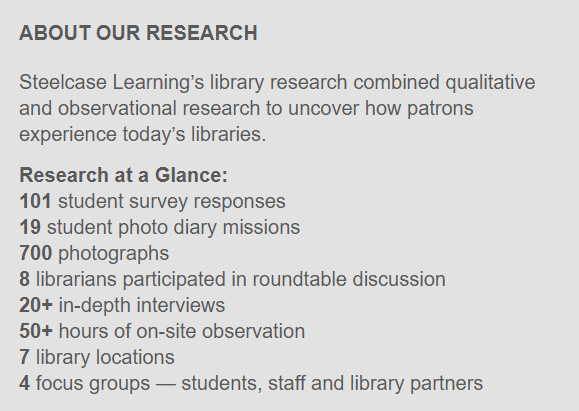

Rethinking the Library for a New Generation of Learners
Rethinking the Library for a New Generation of Learners
Today’s students learn in new ways, but many libraries remain unchanged. Steelcase Learning explores how design helps library spaces evolve with education.
Across campuses, how students use libraries is rapidly changing. Once solemn spaces for solitary study, they now pulse with the rhythm of group projects, tutoring sessions and community gatherings. Yet many institutions find their physical environments still stuck in the past, built for a world of books but not bandwidth.
Campus leaders increasingly recognize that their libraries no longer align with how students actually learn. Even as technology and pedagogy evolve, floorplans remain frozen: too static, too silent, too separate from student life. Students arrive with devices in hand and collaboration on their minds, but often struggle to find spaces that support both focus and connection.
“Students told us they love their libraries,” says Andrew Kim, Steelcase WorkSpace Futures director of research and innovation. “But many said the spaces don’t always meet their needs. We set out to understand why and how the design of the built environment could help.”
Kim leads the education research team at Steelcase Learning, which conducted ongoing research to explore how libraries can better serve today’s learners, faculty and library staff. The research indicates that libraries, once seen primarily as archives of knowledge, are evolving into dynamic environments that foster wellbeing, collaboration and discovery.
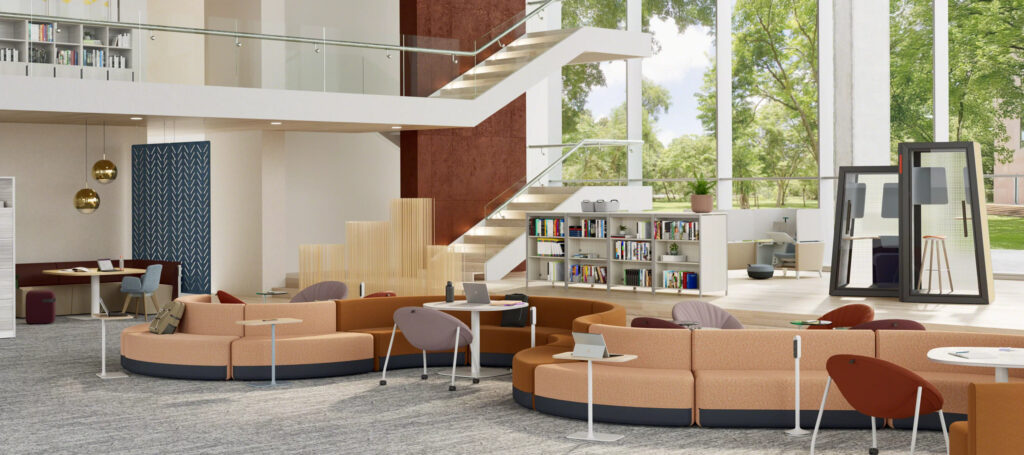
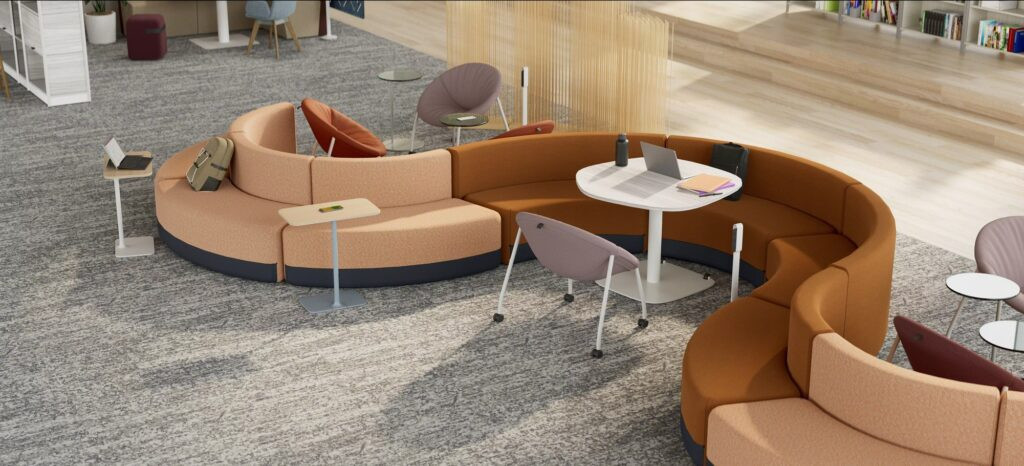
A social hub within a library creates a flexible, welcoming environment for casual connection, light focus, and comfort – empowering students to choose how they work, relax, and interact.
The Pressure to Change
In higher education, the library has long been the intellectual center of campus life. But as learning shifts toward project-based work, interdisciplinary study and hybrid formats, that role is under strain. Students now arrive with access to limitless digital information, yet they crave something far more human: a place that supports connection, creativity and community.
“Libraries are being asked to do more within the same walls,” Kim says. “They need to flex between being a study hall, social hub, innovation lab and wellness space, sometimes all in one day.”
This shift is not simply aesthetic. It is existential. Universities are discovering that outdated, underused libraries signal a deeper challenge: how to design environments that engage today’s learners and prepare them for the rapidly changing world ahead.
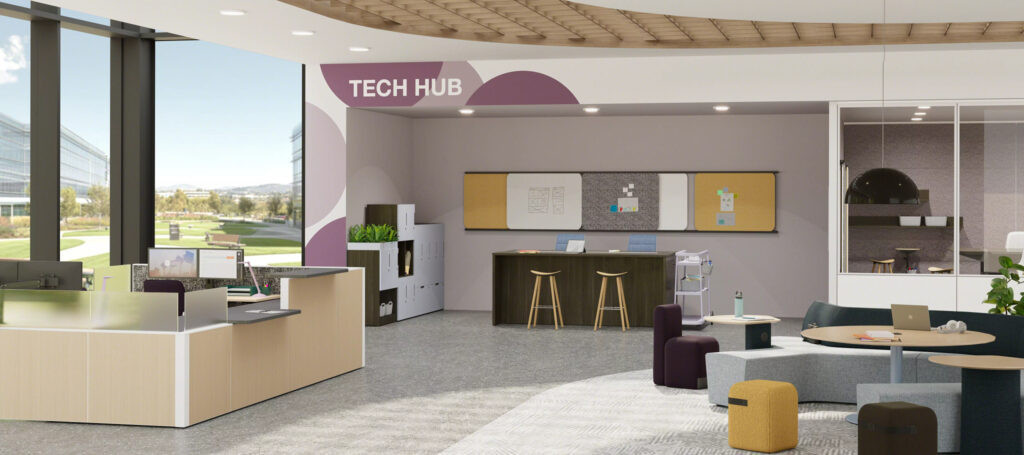
A Tech Hub within the library gives students easy access to resources and tech-enabled problem-solving.
Understanding Today’s Learners
To uncover what libraries must become, the Steelcase Learning research team visited campuses across the country, observing how students, faculty and librarians use their spaces every day. What they found revealed a growing set of tensions shaping higher education:
- Libraries built for silence now host collaboration.
- Spaces designed for a steady state of study must now support a continuously changing range of learning behaviors.
- The need for individual focus must coexist with community, creativity and belonging.
Steelcase Learning’s research revealed how these tensions play out across campuses and design principles to help institutions adapt. At a time when universities must demonstrate the value of in-person learning, the library represents an unmatched opportunity to reinforce campus identity. It is the rare space that serves every user: first-year undergraduates, graduate researchers, faculty, staff and alumni.
When well-designed, the library becomes more than an amenity. It becomes an ecosystem that encourages lifelong learning, builds social connections and promotes wellbeing. “The library is the heart of campus,” Kim says. “If we want to reenergize learning communities, we need to start by reimagining the spaces within that heart.”
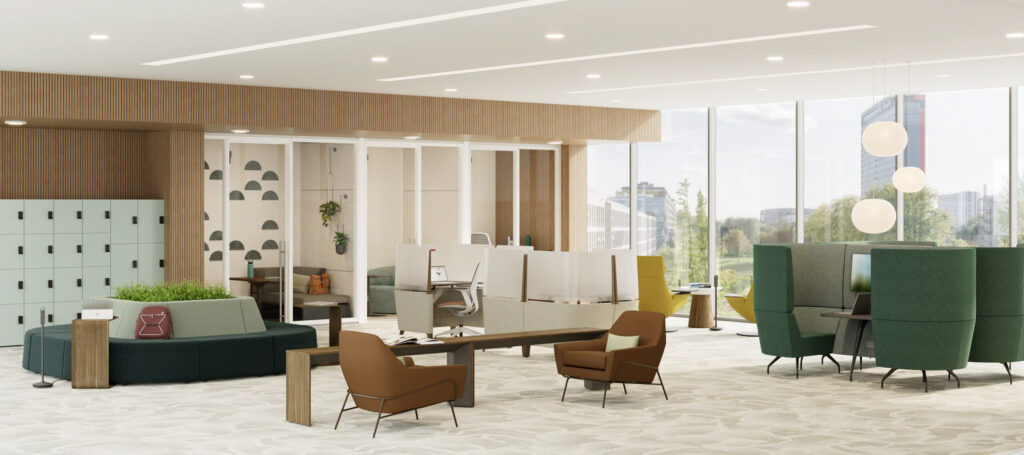

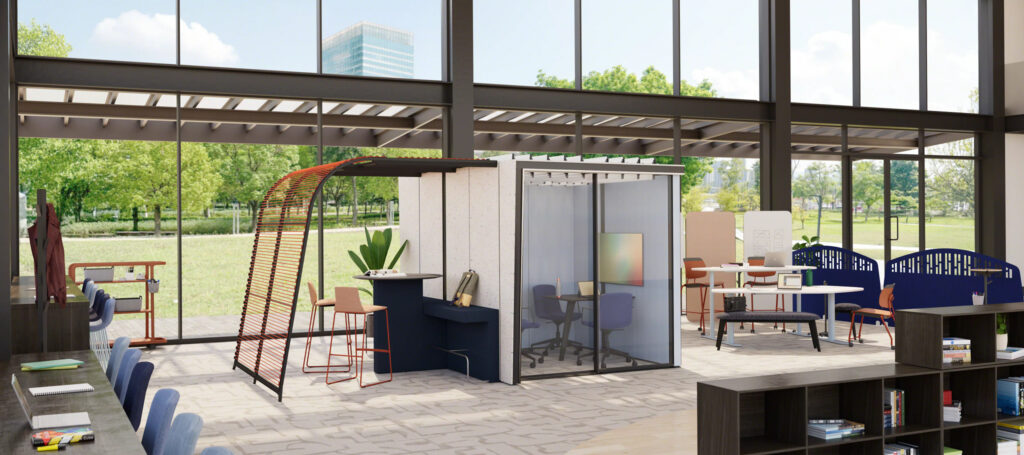
A Study Zone supports deep focus and individual work – from enclosed rooms to open areas. Designed to be inclusive and high performing, it offers accessible paths, hybrid collaboration tools and spaces for reflection and rejuvenation