

Application Ideas
Private/Alone
Individually dedicated spaces support a range of focus and concentration and should consider appropriate human scale for individuals and their wellbeing. Plan for short- and long-term security of personal items and the accommodation of new worktools.
Public/Alone
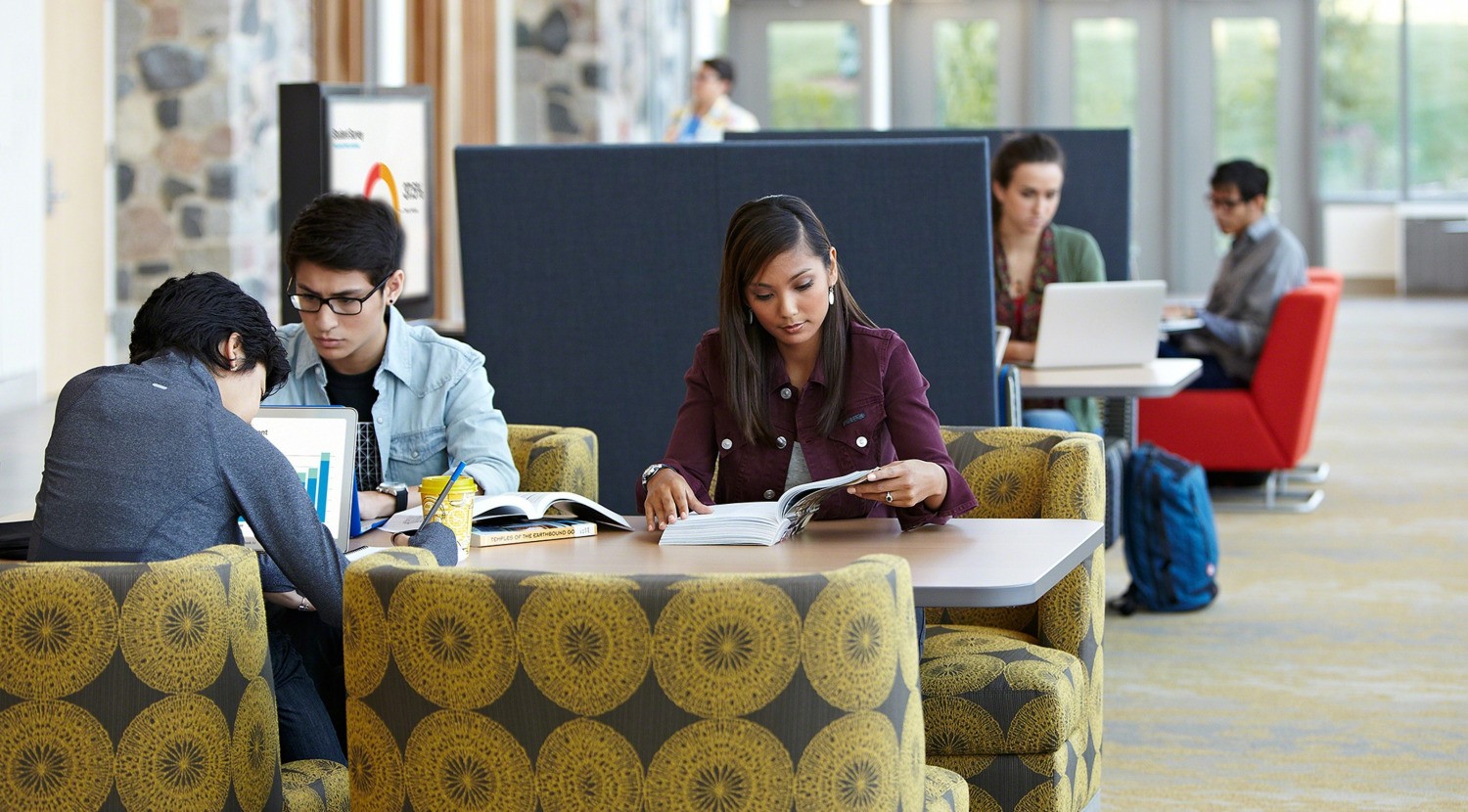
Individuals want to study in the company of others to stay socially connected while working alone in a variety of open settings. Support the need for co-existing focused work and social interactions, allowing settings to switch from individual to dyads and triads. Offer highly flexible and self-customizable furnishings and tools while supporting postural changes for short- and long-term use.
Public/Together
Support the demand for large, scheduled functions with multipurpose, highly adaptable gathering places. Accommodate impromptu teaching and collaborative activities by removing barriers between students and staff. Recognize the increased need for just-in-time technical support for questions, support and maintenance.
Private/Together
Technology-rich library classrooms should accommodate multiple uses such as active learning, computing and distance learning with fluid transitions. Support multiple meeting modes — inform, evaluate and co-create—for small to large groups.
Featured Work Spaces

High Performing Social Spaces

Empowering Teams

Innovation Center
Inspiring Spaces

WorkCafé

Lounge Spaces

Creative Spaces

Smart + Connected Workplace

Small Business
