

A New Mindset
Designing Spaces to Create a Cognitive Advantage
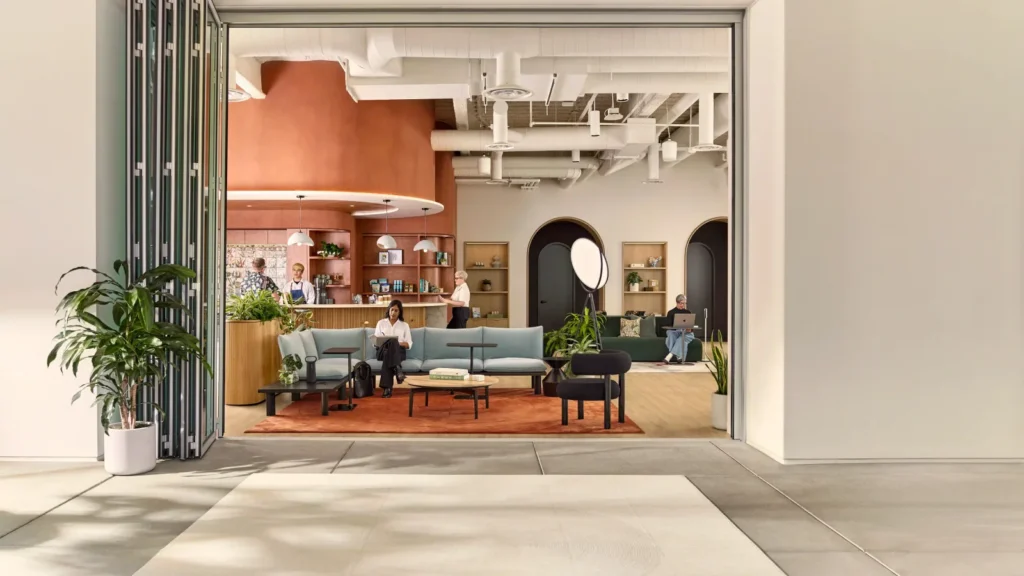
Our minds power creativity, resilience, and connection—but they’re not limitless. The brain is a biological organ affected by stress, noise, and constant stimulation, and today’s fast-paced, AI-driven work often pushes it beyond healthy limits. To truly perform well, we need to prioritize brain health and support how people think, focus, and recharge.
In this “brain economy,” wellbeing at work means protecting attention, reducing overload, and creating environments that help people think clearly. When we support brain health—through thoughtful spaces and fewer distractions—we enable better focus, stronger problem-solving, and more sustainable performance.
From Badge Swipes to Brain Power
For decades, we have operated in the Attendance Era. Presence measured success. If your badge swiped in at 8:00 a.m. and out at 5:00 p.m., you were considered productive. In our new reality, AI automates routine tasks, and the premium asset is cognitive capacity — the uniquely human ability to navigate ambiguity and exercise critical judgment. We have entered the Attention Era, where brain health is no longer “just” a personal wellness goal but also a strategic business asset.
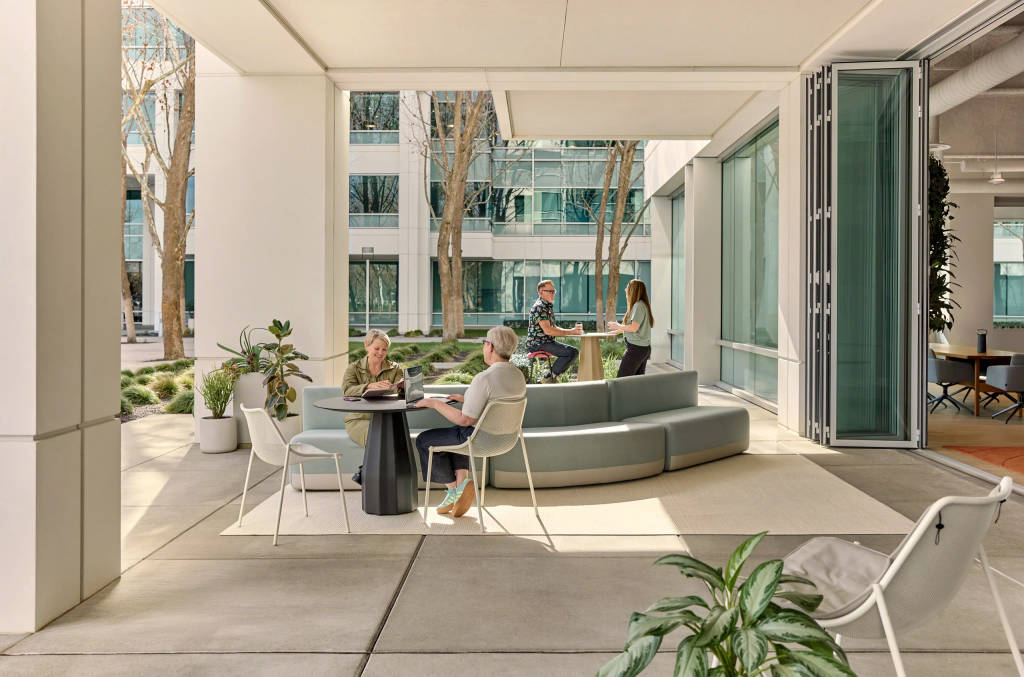
“In the Attendance Era, the office was a container for people. In the Attention Era, it must support concentration, collaboration and creativity. To solve complex problems today, we need environments that relieve the cognitive burden rather than add to it,” says WorkSpace Futures researcher Patricia Kammer.
Many leaders are still optimizing for attendance mandates (“Are you here?”) rather than enabling performance (“Can you think?”).
We are moving from an era defined by where you work to one defined by how you think.
– Patricia KammerSteelcase WorkSpace Futures Researcher
Ergonomics for the Brain
In today’s brain economy, we need a new approach to workplace design. It’s not just about reducing distractions. It’s about creating spaces that support focus, creativity, and resilience, so people can do their best thinking.
We also know the brain can continue to grow and adapt over time. Environments rich in sensory and social experiences can strengthen connections in the brain. Thoughtfully designed workplaces can support brain health and improve how people think, learn, and perform. We accept the need for ergonomic chairs to support our bodies. Now, we can apply the same thinking to the brain. Cognitive ergonomics focuses on how space affects how we think and perform. There is no single perfect space. Instead, a variety of areas should support different types of work and how the brain functions best.
Community-Based Design creates zones that give people choice in how they work. These spaces support focus, connection, and emotional wellbeing. They also help people manage attention and adapt more easily. Flexible workspaces play a key role. They allow people to adjust their environment to fit their needs. This can improve focus, support brain health, and boost resilience and productivity.
“Flexible workspaces are a prime example of how design can support brain health,” notes Dr. Debbie Beck, principal, at Perkins & Will and a key contributor to The Building Brains Coalition’s latest report. “These adaptable environments allow individuals to tailor their surroundings to fit their working styles and preferences, which can enhance focus and cognitive performance. By accommodating new technologies and work methodologies, flexible workspaces help keep the brain engaged and agile, promoting mental resilience and productivity,” she notes.
There is a range of spaces organizations can explore to better support the brain:
Spaces for Connection
There’s no need to demonize the open floorplan, though. Open areas, such as cafe spaces, serve as a “city center” — a relaxed, alternative to individual desks and a place to make connections. It’s a place for shared energy and informal knowledge transfer. “Loneliness triggers a ‘threat state’ in the brain,” explains Patricia Kammer. “We cannot innovate if we feel socially isolated.” The office provides a “collective identity” that virtual meeting platforms cannot fully replicate. This is partly because face-to-face interaction releases neurochemicals essential to building trust and psychological safety, which are the foundations of risk-taking and innovation.
Spaces for Rejuvenation
The brain cannot sprint for eight hours. It needs “palate cleansers” to replenish resources. The answer lies in our biology. Psychological studies show that “positive affect” (feelings of joy and comfort) increases dopamine levels, which in turn improves creative problem-solving.
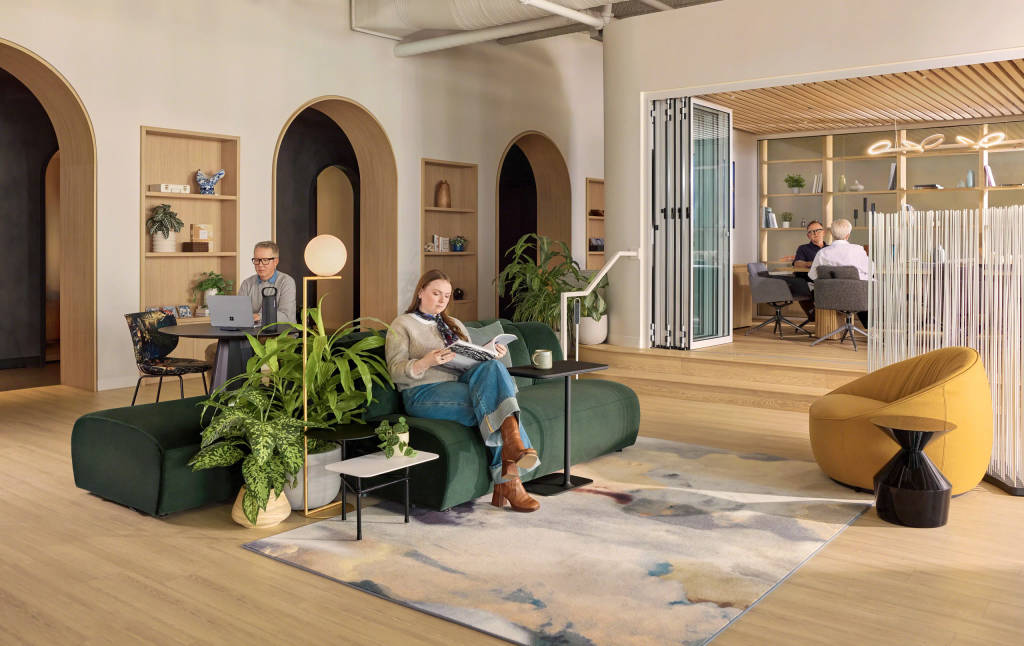
NBBJ Fellow and molecular biologist Dr. John Medina reminds us that nature is a powerful trigger for positive affect. Specific cues tap into our biology: color palettes of blues, greens and oranges can aid focus, while rounded edges make us feel safer than sharp corners. Natural materials such as wood and wool are “organic” elements that help lower stress and reset cognitive capacity.
Spaces for Movement
Bodily experiences and our physical surroundings influence cognition — including memory, emotion, and decision-making. Movement engages areas of the brain that help offload working memory, freeing up energy for other areas to develop novel solutions to problems.
Spaces that promote movement and physically engaging in collaboration — standing, perching and reorienting — help circulate dopamine, which improves attention, creativity and problem-solving. Spaces equipped with whiteboards and vertical pin-up areas foster physical participation in group work sessions and also enable “cognitive offloading.” By making information persistent and visible, we free up working memory for processing rather than storage. The room itself becomes the external hard drive.
Spaces for Focus
Deep work requires protection. “Inhibition control” is the biological energy required to stop impulsive actions and ignore distractions. When we are exposed to constant noise and visual stimulation, our brains subconsciously monitor the room. For open plans to work, they must be balanced with high-privacy spaces, such as pods or shielded workstations, that reduce distractions. Gaining focus doesn’t always require fully enclosed spaces.
We have spent decades measuring “operational efficiency” (how cheaply we can house employees). Now, the brain economy asks us to measure our “innovation capacity” (how effectively we can support their minds). We can’t slow the velocity of information. But we can design workplaces that protect attention, reduce cognitive load and empower us to perform at our highest potential. In the brain economy, the ultimate competitive advantage isn’t your real estate footprint. It is your people’s collective ability to think deeply and solve complex problems. “The brain health of your employees is the engine for your company’s productivity,” notes Eyre.