

From Ocean to Office
How a New Steelcase Fabric is Reinvigorating the Office and the Ocean
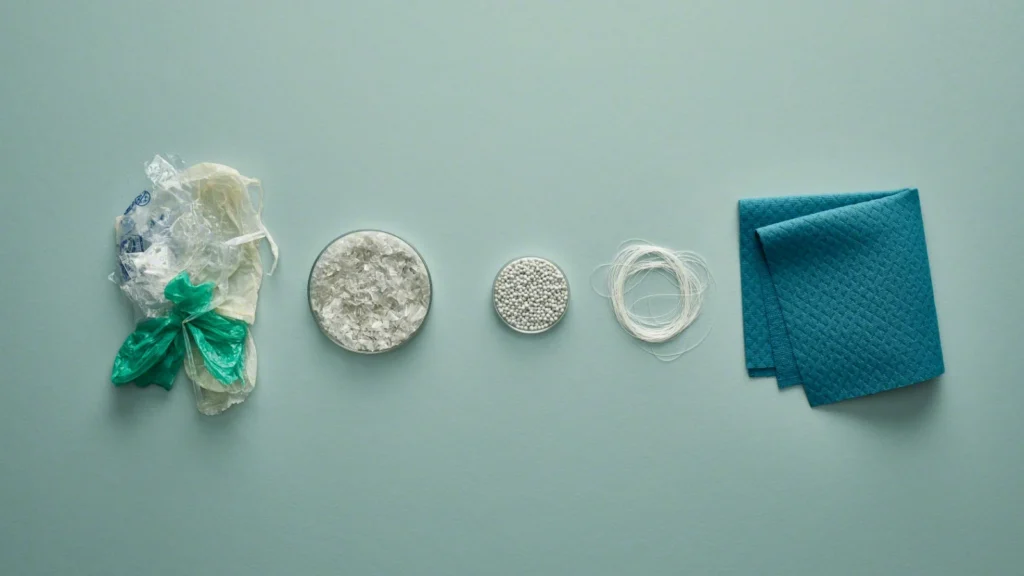
Every year, 12 million tons of plastic enter our oceans and linger for decades. Steelcase responds with Intersection, a screen and panel fabric made from Upcycled Marine Plastic that revitalizes the workplace while helping clean the ocean.
Creating a Cleaner Ocean
As Steelcase searched for new ways to rethink materials, the company reconnected with longtime collaborator Duvaltex. Together, they set out to create something fresh and exciting and soon discovered SEAQUAL INITIATIVE—a collaborative community of individuals, organizations, and companies working to clean oceans, raise awareness about marine litter, and spotlight those fighting it. The community supports ocean‑cleaning efforts by transforming marine litter into Upcycled Marine Plastic, a fully traceable and sustainable raw material.

By giving marine plastic, a second life in industry and responsibly disposing of other collected waste, SEAQUAL is simultaneously cleaning up the ocean and creating a more sustainable supply chain.
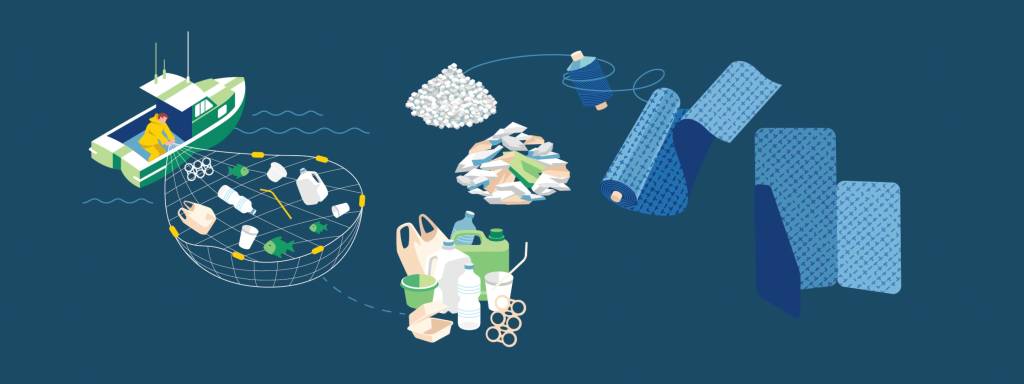
By collaborating with local European clean-up programs and fishermen to collect ocean waste, SEAQUAL INITIATIVE is doing its part to put a dent in the plastics problem.Teams clean the plastic waste and transform it into Upcycled Marine Plastic. Industries then give this material a second life by turning it into beautiful, sustainable products. Steelcase collaborates with the SEAQUALⓇ YARN team to weave yarn containing Upcycled Marine Plastic into the Intersection fabric. The impact is significant: every yard of Intersection removes half a pound of plastic waste from the ocean.
The impact is staggering. Every yard of Intersection removes up to half a pound of plastic waste from the ocean.
Partnering with Duvaltex and its CLEAN IMPACT TEXTILES™ technology, Steelcase was able to create a sustainable material that still maintained its visual appeal. “When Duvaltex came to us, they had this incredibly beautiful fabric that not only met all of our technical needs as it relates to application and screen design, but also had this incredibly important environmental story,” says Kari Miller, product manager for Global Surface Materials at Steelcase. “We’re constantly thinking about sustainability as a company and how to integrate it into material development. This initiative hit it straight on the head.”
The Path to Intersection
The journey from ocean to office begins with organized clean-ups and ends with a beautiful, sustainable fabric. Here is the process:
Collect
Local European fishermen and other organized ocean clean-ups collect ocean waste. They deliver the waste to SEAQUAL INITIATIVE approved facilities.
Transform
SEAQUAL INITIATIVE–approved facilities sort, clean, and transform the plastic into Upcycled Marine Plastic. Traditional recycling routes then responsibly process or dispose of the remaining metal, glass, and other waste.
Create
Steelcase and its partners return it to industry as materials such as SEAQUAL® YARN used in Intersection. Steelcase and Duvaltex use the Upcycled Marine Plastic.
The Quest for Beauty
Beyond its environmental benefits, Intersection meets the need for a modern and compelling screen and panel fabric. It supports the evolving priorities of organizations and designers. Today, screens play a more architectural and visual role in the workplace. They help define the look and feel of the office. At the same time, they provide visual or acoustic separation where needed.
As companies bring employees back to the office, they are retrofitting their spaces to accommodate new safety guidelines. “Our new reality is one that requires more screens, panels and partitions in the office to divide workspaces,” says Julie Yonehara, global material designer at Steelcase.
“The office is going to have to be less monolithic in a way, breaking up that large chunk of color and finding material that gives it more expression.”
Julie Yonehara Global Material Designer, Steelcase
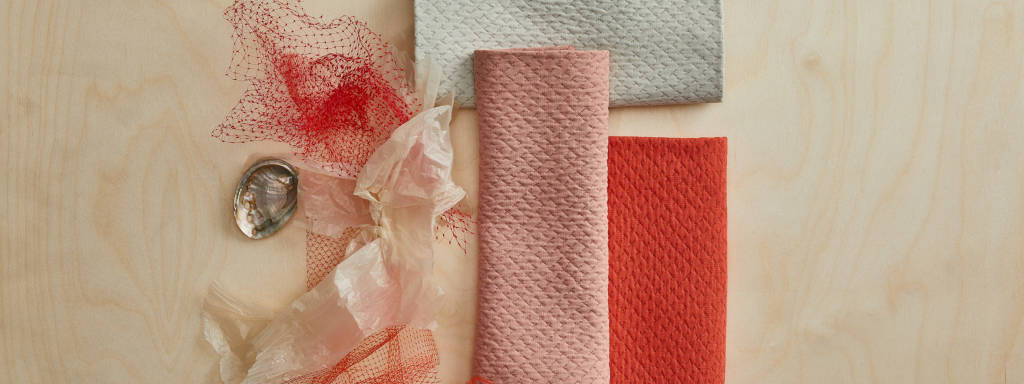
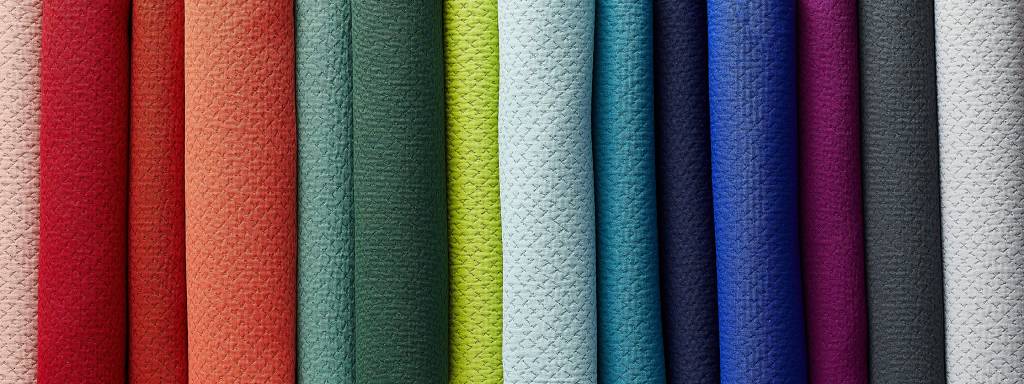
Intersection combines a small crisscross weave with a subtle pucker to create a unique three‑dimensional visual. Steelcase worked with Duvaltex to develop the color options, providing fresh and modern colors that fit within contemporary palettes.
An Ongoing Commitment
Steelcase has long kept a strong commitment to sustainability and environmentally conscious design as a company. Engineers and designers developed innovative solutions to create more sustainable products. These products include planked veneer and the New Black textile collection that were created entirely from Steelcase scrap fabric. Sustainability efforts have been amplified by working with other like-minded organizations such as Duvaltex. Founded in 1947, Duvaltex’s first material offered yarn recycled from old wool blankets. Steelcase and Duvaltex have collaborated on several landmark projects that include The New Black textile collection, the 2011 Closed Loop program with Designtex, a Cradle to Cradle Certified™ product in 2005, and the first recyclable polyester for commercial interiors in 1995. Building on this legacy, Steelcase continues to pursue more eco‑friendly solutions in future product development. This exploration includes the potential use of SEAQUALⓇ YARN in new materials.
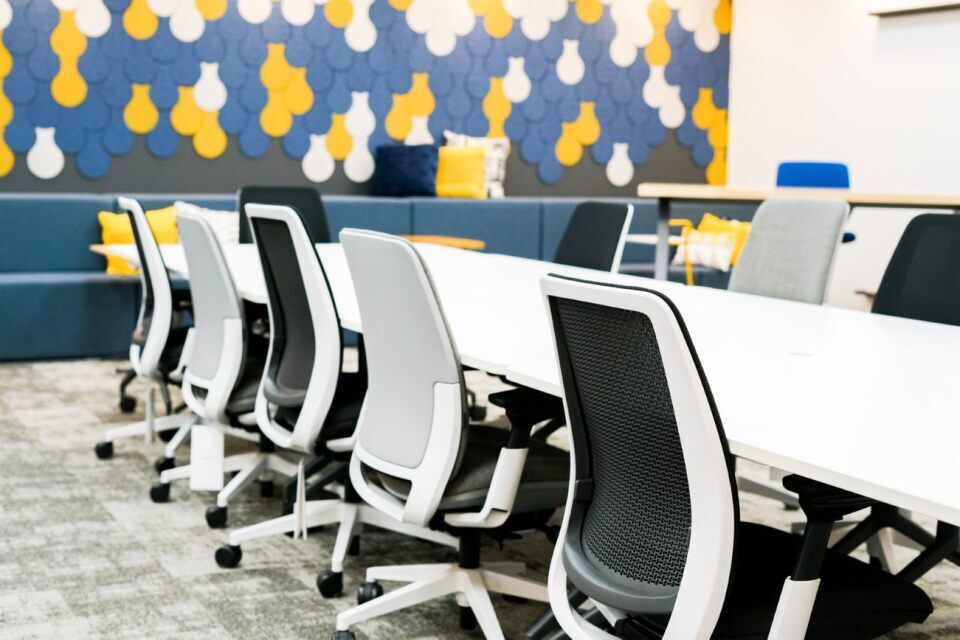
“New Black is also a textile from the Steelcase and Duvaltex partnership. With black as the most specified color for seating, the five New Black patterns give more beauty and choice to our black upholstery options on Steelcase seating portfolio. To create these textiles, panel fabric scraps from the Steelcase production process are re-spun into black thread. Paired with the white recycled polyester thread, New Black is made of 100% recycled material and powers a strong circular economy story. All of the task chairs in the Learn Lab at the LOTH Cincinnati are various patterns of New Black.”
-Hannah Williams, LOTH Creative Lead